The Things I Almost Said No To
Let’s get one thing straight: I came to Cornell to become a better programmer.
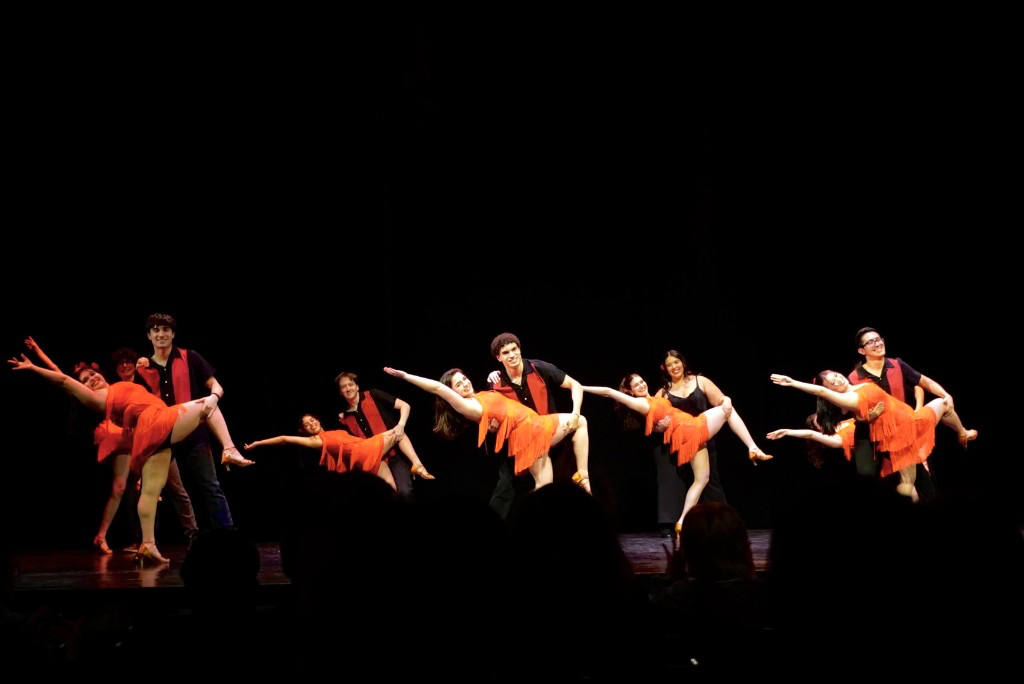
Not to make friends. Not to “find myself.” Not to join a salsa dancing club.
(Spoiler: I did all of those things anyway.)
I arrived with a plan. A solitary, outcome-driven plan. Grind leetcode. Crush the classes. Land the internship. Rinse and repeat until I emerged as a fully-formed software engineer ready to conquer Big Tech.
(If you’ve read Finance bro? Engineer? Nah, Let Me Write Code Instead, you already know how I got here.)
It was a good plan. Clean. Measurable. Individual.
It was also completely wrong.
What Spain Taught Me (And What I Forgot)
Growing up in A Coruña, I learned something without realizing I was learning it.
Evening paseos weren’t just walks – they were the infrastructure of community. You’d step outside around 8 PM, and the streets would fill with people. Neighbors. Friends. Strangers who’d become friends by the end of the walk. No agenda. No networking goals. Just presence.
Conversations would start casually and turn into something real. Someone’s aunt would join. Then a friend from school. Before you knew it, you had a moving cluster of people, and somehow in all that chaos, progress was happening. Ideas were forming. Connections were building.
That was just how life worked. Progress happened in shared spaces, not in isolation.
I didn’t think about it as a “system” or a “strategy.” It was just… life.
The Texas Reset
Then I moved to The Woodlands at sixteen, and something shifted.
Texas wasn’t bad – don’t get me wrong. But it was different. The communal rhythms I’d grown up with didn’t translate. People drove everywhere. Dinners happened earlier and faster. Social life required more planning, more intentionality.
Without the natural infrastructure of community around me, I adapted. I became more individual. More outcome-focused. More metric-driven.
It wasn’t a conscious choice. It was just survival. When the passive systems of connection disappeared, I replaced them with active systems of achievement.
By the time I was applying to colleges, I had fully transformed into that person. The one who sees career as a ladder to climb. Alone. Efficiently. With maximum optimization.
Spain’s lesson about shared spaces? Quietly forgotten.
The Cornell Arrival (Armed with the Wrong Map)
I showed up to Cornell in fall 2023 with that Texas mindset fully loaded.
Here’s what I thought would happen: I’d lock in on academics. Get really good at Computer Science. Build an impressive resume. Network strategically at career fairs. Land a top internship. Graduate with options.
Notice what’s missing from that plan? People. Real people. Not networking contacts or study partners or resume line items. Just… people.
I wasn’t trying to be antisocial. I genuinely thought that’s how you succeeded in tech. Individual excellence. Grind culture. The whole “10x engineer” mythology.
Turns out, the best work I’d do at Cornell – the things that actually mattered – wouldn’t happen in lecture halls or late-night solo coding sessions. It would happen in the spaces where we all figured it out together.
A Swimming Trip and a Study Partner
Orientation week. Everyone’s awkward. Everyone’s pretending they’re not awkward.
Someone suggests a trip to Treman State Park – this swimming spot about fifteen minutes from campus. I almost didn’t go. Too busy “optimizing” my schedule, planning out my classes, getting ahead.
But I went. And I met Joyce.
I don’t remember what we talked about that first day. Probably the usual stuff – where you’re from, what you’re studying, why Cornell. But something clicked. Not in a dramatic movie moment way. Just… easy conversation. Natural.
We ended up in the same classes that semester. Then the next semester. Then every semester after that.
Joyce and I have taken classes together for my entire Cornell career. We became Teaching Assistants together. We’re now tackling grad school applications together.
There was a night during the CS 2110 final project – some OOP assignment we’d nicknamed McDiver – when we pushed it to the very last minute. We were at Crossings Café, our usual spot on north campus by the bubble tea station, running on no sleep and less patience. Git stopped cooperating, and neither of us had it in us to figure out why. So we split up, each finished our half alone, and when merging still wouldn’t work, we just emailed our code to each other and pasted it together by hand. Not our finest hour, programming-elegance-wise. It worked anyway.
Here’s the thing about Joyce: she made mutual accountability feel natural. Not forced. Not transactional. We just… showed up for each other.
Neither of us missed that many morning lectures. Not because we were morning people, but because we knew the other person would be there. When concepts got dense – and they always got dense – we’d trade off roles. One day I’d be teaching, the next day I’d be the confused one asking all the questions.
She didn’t just become my study partner. She redirected me toward something better: collective success.
And it all started because I said yes to a spontaneous swimming trip during orientation week.
The Pattern Emerges: The best study partnerships aren’t built on shared ambition. They’re built on showing up for each other on the days you don’t feel like it.
The Power of Yes (And How Chris Ruined My Plans)
I met Chris in a First-Year Writing Seminar.
You know those people who just seem to have good things happen around them? That was Chris. Not in an annoying way. Not in a “naturally lucky” way. In a “this person says yes to everything and creates opportunities through sheer presence” way.
I wanted that energy. So I started saying yes when he invited me to things.
Which is how I ended up in Pa’lante, Cornell’s salsa dancing club.
Now, let me be clear: I did not plan to be a salsa dancer. That was not on the Cornell optimization roadmap. Dancing was not going to help me land a FAANG internship. It made zero strategic sense.
But Chris had this way of making saying “no” seem like you were missing out on something amazing. And honestly? I was curious.
That first class was humbling. I had no idea what I was doing. Everyone else seemed to know the basic steps. I was just trying not to step on anyone’s feet.
But here’s what happened: I kept showing up. Week after week. And somewhere between the awkward first lessons and actually being able to lead a turn without panicking, I realized something.
The more you show up – to things, to places, to experiences outside your comfort zone – the more unexpected good things happen to you.
Pa’lante introduced me to people I never would have met otherwise. People from different majors, different backgrounds, different trajectories. The conversations after practice were often better than the dancing itself.
Chris taught me something finance-bro me had forgotten: life has an explore vs. exploit trade-off, and I’d basically forgotten explore mode existed.
Sometimes the “inefficient” choice is actually the highest-leverage move.
The Gym as an Unconventional Classroom
By sophomore year, I’d found another unexpected community: the gym.
I started going to Noyes (Cornell’s gym) regularly. Weightlifting. Calisthenics. Basic stuff. But the consistency mattered. Same time. Same place. Same faces.
Here’s something I learned: hobbies are how you find your people.
The people who showed up at 7 AM to lift? Not “better” than anyone else. Just… consistent. The kind of people who do hard things because hard things are worth doing.
We bonded between sets not just because of fitness, but because we shared something deeper: a belief that self-improvement is a daily practice, not a destination.
And because we all came from such different backgrounds – different majors, different career paths, different life experiences – our conversations turned into these deep explorations of philosophy, career strategy, and what actually matters.
The gym became an unconventional classroom. The best kind.
I learned more about career planning from post-workout conversations than from any formal career center appointment. Because these weren’t scripted networking conversations. They were real. People talking honestly about their struggles, their pivots, their uncertainties.
The best partnerships aren’t built around sameness. They’re built around different perspectives coming together in a shared struggle.
When Someone Sees Potential You Don’t
During my sophomore year, I went to the International Gala – mostly for the free food, if I’m being honest.
That’s where I met Marc.
Marc was an upperclassman. Already had his internship lined up. Already knew the game. And for some reason, he saw something in me that I didn’t see yet.
We started talking about the software engineering recruitment process. I was nervous about it. Didn’t know if I was good enough. Didn’t know if I’d prepared enough. Classic imposter syndrome stuff.
Marc didn’t just give me generic advice. He mentored me. Mock interviews. Resume reviews. Pep talks when I bombed a technical screen.
He walked me through the Meta recruitment process step by step. Held my hand through the parts that felt impossible. Believed in me when I didn’t believe in myself.
And when I finally got the offer? He was genuinely excited. Not in a “good job, kid” way. In a “I knew you could do it” way.
That’s when he told me something that changed my perspective: “I had a mentor. And he had one before him. It’s a chain. Eventually, it’ll be your turn to add a link.”
At the time, I nodded and thought “yeah, sure, someday.”
I didn’t realize “someday” would come so quickly.
Becoming the Mentor (Whether I Was Ready or Not)
Sophomore year, a freshman named Gabriel approached me at the gym.
He was ambitious. Curious. A little lost – which, honestly, is the natural state of being a CS freshman at Cornell.
He asked for advice on navigating his first semester. How to balance coursework. How to prepare for internships. The usual stuff.
I saw my younger self in him. So I started mentoring him.
Around the same time, I met Hansel through Pa’lante. Turns out he also loved early morning workouts. We started training together.
Then came Zain. Met him through mutual friends. His technical curiosity was infectious. Every conversation turned into a deep dive into some concept or framework.
The three of them – Gabriel, Hansel, Zain – kept ending up in the same classes. They naturally formed a study group. And I just… became part of the orbit.
We’d eat together. Train together. Debug code together. The line between “mentor” and “friend” blurred so fast I didn’t even notice it happening.
They weren’t projects. They weren’t mentees. They were just people I liked spending time with. People who made me think harder. People who challenged me.
And then one day, Zain pitched an idea: “We should start something.”
Fyndz: The Startup That Failed Successfully
The idea was Fyndz. A platform to help people discover local thrift and vintage stores, reserve items, and share community finds.
Was it a good idea? At the time, we thought so.
Did we have any business experience? Not really.
Did we know what we were doing? Absolutely not.
We built it anyway.
For months, we worked on Fyndz. Late nights. Weekend sprints. The whole startup grind. We learned React Native. We built APIs. We designed user flows. We pitched to anyone who would listen.
It didn’t work.
Not in a dramatic flameout way. Just in a quiet “this isn’t gaining traction and we’re running out of steam” way.
We could have been devastated. We could have seen it as a failure.
It wasn’t the outcome we wanted. But it wasn’t wasted either.
The venture didn’t survive. What stuck was what we built along the way: how to start something from scratch, how to work as a team under pressure, how to disagree constructively, how to fail and keep showing up the next day.
And honestly? Watching what happened next mattered more than the venture itself.
Hansel landed an offer at Jane Street. Zain landed one at Bloomberg. Gabriel got into Y Combinator with a different startup.
They didn’t need me to succeed. They were always going to be exceptional.
But I got to watch it happen. I got to be part of their journey. And that? That’s the kind of success that actually matters.
Full Circle
Here’s what I thought success looked like when I showed up to Cornell: individual achievement. Clean metrics. Impressive resume lines. Climbing the ladder faster than everyone else.
Here’s what I actually learned: collective growth. Shared struggles. Helping someone else climb while they help you.
I came to Cornell to master Computer Science – algorithms, data structures, system design. I did learn those things. But the most important lesson wasn’t technical.
The informal networks mattered more than the formal ones. The late-night study sessions. The post-workout conversations. The spontaneous trip to a swimming hole. The failed startup that taught me more than a successful one probably would have.
Spain taught me that progress happens in shared spaces.
Texas made me forget.
Cornell reminded me.
I didn’t come to Cornell to build a community. I came to build a career. I’d optimized everything except the one variable that actually mattered.
The people I met at Treman State Park, on the dance floor, in the gym, at random events I almost didn’t attend? They weren’t a distraction from the plan. They were the piece I’d left out of it.
Joyce, Chris, Marc, Gabriel, Hansel, Zain – and dozens of others I haven’t mentioned. They’re not networking contacts. They’re not resume bullets. They’re the reason Cornell mattered.
The most important things I built at Cornell aren’t programs. They’re the relationships. The spaces. The infrastructure of mutual support.
And here’s the wild part: it all started because I said yes. To a trip to Treman State Park. To a salsa class. To early morning gym sessions. To conversations with strangers. To mentoring someone when I barely knew what I was doing myself.
The Real Lesson: Your best opportunities won’t come from your five-year plan. They’ll come from the random Tuesday when you say yes to something that makes no strategic sense. Show up anyway. The people you meet there might change everything.
So if you’re reading this as a student, here’s my advice: throw out your optimization plan. Or at least, optimize for the right things.
Don’t just optimize for grades or internships or resume lines. Optimize for showing up. For saying yes. For building spaces where you and your peers can thrive together.
The technical skills matter. The algorithms and frameworks and best practices all matter.
But the people matter more.
Spain knew this all along. It just took me two and a half years at Cornell to remember.
If you’re at Cornell (or anywhere, really) and you’re reading this – hey. Show up. Say yes to the random invitation. Go to Treman State Park. Join the weird club. Talk to the person at the gym. The best parts of your college experience are probably sitting in the stuff you almost said no to.
See you out there.