How I Optimized My Summer at Meta
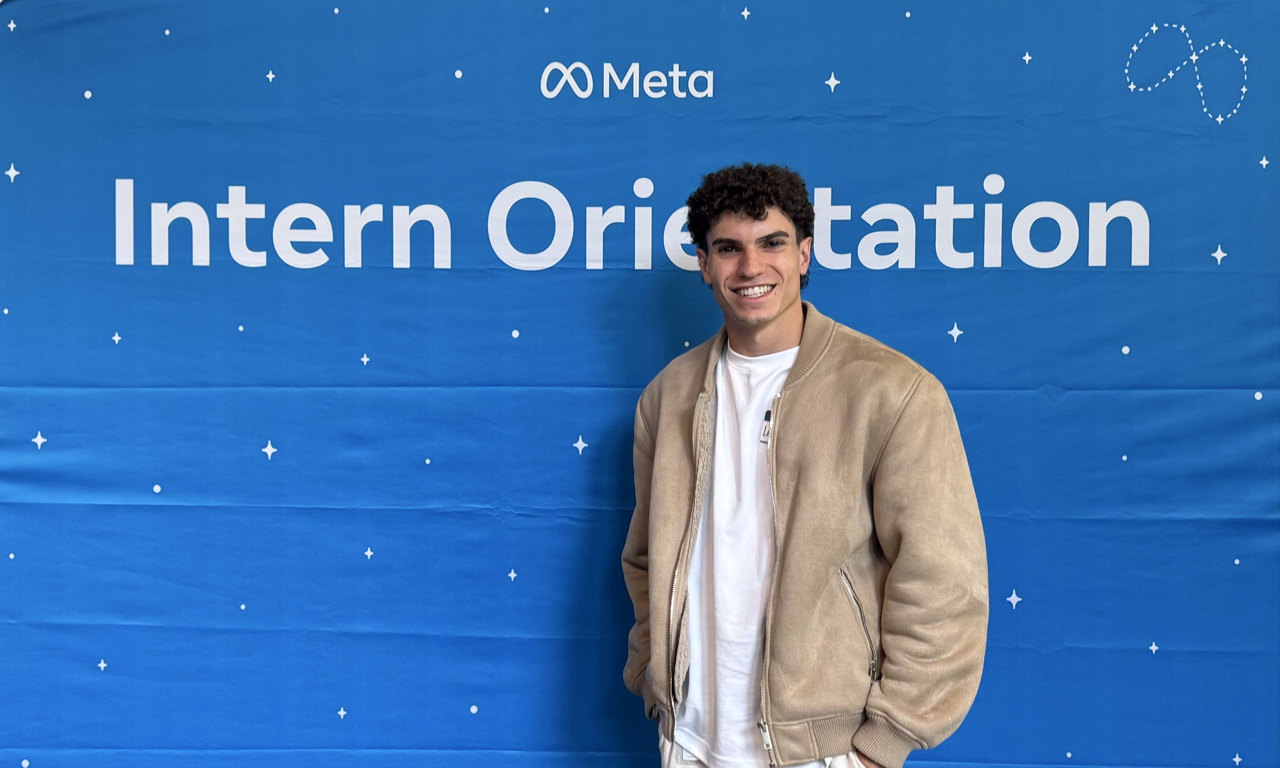
Let’s get one thing straight: I didn’t move to Bellevue, Washington to “find myself” or “embrace the Pacific Northwest lifestyle.”
I moved there to secure a return offer. With maximum efficiency. Like the finance bro I was always meant to be – except instead of optimizing portfolios, I was optimizing pull requests.
If you’ve read my earlier posts, you know my journey into tech wasn’t exactly linear. Finance, physics, aerospace, and then – plot twist – code. Well, this summer was the next chapter. The one where I actually got to prove I could do this thing professionally. At Meta. On tools that serve billions of people.
No pressure, right?
Not Your Typical Seattle Intern Summer
Here’s the thing about Big Tech internships in Seattle: there’s a vibe. The stereotypical intern summer involves living in Capitol Hill or South Lake Union, partying at The Olive on Thursday nights, networking over overpriced cold brew, and posting Instagram stories with captions like “grateful for this journey.”
That wasn’t my summer.
While other interns were optimizing their social calendars, I was optimizing something else entirely. My sleep schedule. My gym routine. My output.
I chose to live in Bellevue – 10 minutes from the office. Not Seattle. Not the city with the nightlife and the rooftop bars and the “main character energy” moments.
Bellevue. Where the most exciting thing that happens after 9 PM is a Safeway restocking their shelves.
And honestly? Best decision I made all summer.
See, everyone wants to live where the action is – the trendy neighborhood, the Instagram-worthy apartment, the place where other interns hang out. But if that means spending 90 minutes a day commuting? You’re trading real productive hours for… vibes.
The Daily Loop
Let me walk you through what a typical weekday looked like. It was simple, but honestly, I kind of loved it.
While other interns were sleeping off whatever happened at Tuesday night’s “casual drinks” (that somehow ended at 2 AM), I was up at 6 AM by choice.
Here’s the thing: I actually like mornings. I like not having to rush. I’d make my espresso and spend ten minutes just sitting on the terrace, watching the world wake up. It’s my favorite ritual: no inbox, no notifications, just a cup of coffee and a little quiet before everything starts.
Once I’d finished my espresso and let myself have that moment, the day would really begin.
A 10-minute walk to the light rail station, then a breezy 5-minute ride to the office. No traffic jams. No Uber surge pricing. No “sorry I’m late, there was an accident on I-5.” Just me, my AirPods, and music.
And before breakfast, before Workplace messages, before any standup – the gym.
Block 24 had a solid fitness center, and I treated it like a mandatory meeting. Non-negotiable. Weightlifting and calisthenics.
There’s this psychological thing that happens when you’ve already crushed a workout before 8 AM: the rest of the day feels… manageable. That bug that’s been haunting you? Less scary. That meeting with your skip-level manager? Whatever, you already lifted heavy things.
One evening at dinner, someone I’d never met walked up to my table and said, “Hey, you’re the guy who was doing muscle-ups this morning, right?”
I didn’t know whether to be proud or embarrassed. But it did confirm one thing: people notice when you show up consistently. In the gym. In the office. Everywhere.
Post-gym, post-shower (yes, we do shower at Meta), I’d roll into the cafeteria – now only slightly sweaty but still extremely hungry – and hit the breakfast. Eggs, bacon, the works. Some people say there’s no such thing as a free lunch. At Meta, there’s a free lunch, a free breakfast, and a free dinner. My grocery bill was basically just protein powder and weekend snacks.
Then came the grind. 10 AM to 6 PM. Deep focus. Headphones on. Workplace notifications muted (mostly). I’d block out my calendar in 2-3 hour chunks for uninterrupted coding. Just me and the codebase, having a complicated relationship.
And here’s a controversial take: I ate dinner at the office most nights.
Not because I was trying to be a workaholic. Not because I wanted to impress anyone with my “dedication.” But because… it was just easier? The food was good, it was free, and it meant I could head home without worrying about cooking or ordering Uber Eats for the fifth time that week.
Plus, the dinner crowd was always interesting. You’d end up at a table with engineers from completely different teams, talking about projects you didn’t even know existed. Some of my best “oh, so THAT’S how that works” moments came from dinner conversations.
By 8 PM, I was home. Done. Cooked. Ready to decompress.
No late-night coding sessions. No “one more feature” at midnight. The whole point of the optimized routine was to get quality work done during work hours so I could actually have a life outside of it.
Wild concept, I know.
Ship Small, Ship Often
Okay, here’s where I have to be annoyingly vague.
I worked on something called Pipeline Health. And that’s about all I can tell you. NDA. Confidentiality. The usual corporate stuff that makes writing about your internship feel like redacting a government document.
But here’s what I can talk about: how I worked, not what I worked on.
At Meta, there’s this metric that matters: diffs. Think of them as pull requests, code changes, contributions – whatever you want to call them. They’re the unit of measurement for “are you actually shipping things?”
I landed 180+ diffs in 12 weeks.
That’s not a humble brag (okay, maybe a little). But the point isn’t the number itself. The point is the mindset behind it.
I treated code like high-frequency trading. Small, fast, frequent changes. Don’t sit on a massive PR for two weeks and then drop a 5,000-line monster that nobody wants to review. Ship small. Ship often. Iterate.
Some days that meant three diffs. Some days that meant zero because I was stuck debugging something that turned out to be a typo. (It’s always a typo.) And some days? Fifteen diffs. But we’ll get to that.
The AI Question
I get asked this all the time: “Do you use AI at Meta?”
The answer? If you’re not using AI, you’re behind.
At Meta, we use AI like nowhere else I’ve seen. Not as a gimmick. Not as a novelty. As a core part of the workflow.
Here’s how it actually worked for me: I’d have AI agents working on different tasks simultaneously – one drafting a component, another writing tests, a third refactoring some utility function – while I worked on a fourth task myself. Then? Review, edit, merge. Rinse and repeat.
I was effectively three coders at once.
That’s how you land 15 diffs in a single day. Not by typing faster. Not by skipping sleep. By treating AI as a multiplier, not a replacement.
The key is knowing what to delegate and what to own. Boilerplate? Delegate. Core logic that requires deep context? Own it. The AI doesn’t understand your codebase the way you do – but it can handle the repetitive stuff while you focus on the hard problems.
Some people are scared AI will replace engineers. I don’t see it that way. I see it as a tool that separates the engineers who adapt from the ones who don’t.
The “Only at Meta” Feeling
There’s this weird duality to working at a company this size.
On one hand, you’re an intern. A temporary visitor. You don’t really know what you’re doing, and everyone around you seems to have been here for years, casually mentioning internal tools like they’re household names.
On the other hand, the code you write actually runs. In production. Serving billions of people. There’s no “practice environment.” No “this is just for learning.” If you mess up, real users notice.
That’s terrifying. And also? Incredibly addicting.
The first time one of my changes went live, I just sat there staring at my screen like an idiot. That’s it. That’s the thing. It’s out there now. Wild.
And then there’s the culture around it. At Meta, when you ship something significant, you get the “Ship It” emoji in your Workplace (their internal messaging tool). It’s dumb. It’s just an emoji. But I’m not going to lie – seeing that hit different.
Let me tell you about the first time I thought I broke something.
I pushed a change. Tests passed. Looked good. Then I pulled the latest code, refreshed our feature, and – the entire frontend stopped working. Just… gone. Blank screen.
I started frantically scanning my diff. What did I touch? What could have caused this? My mind was already drafting the apology message to my manager.
Turns out? It wasn’t my fault. Someone else’s diff had broken it. Phew.
But in that moment of panic, I learned something important about Meta’s engineering culture: they don’t blame people. They blame systems.
When something breaks, you don’t get yelled at. You get a “blameless post-mortem” – a structured review of what went wrong and how to prevent it next time. The goal isn’t to find out who screwed up. The goal is to make the system better so that anyone could make the same mistake and it wouldn’t matter.
That’s… weirdly liberating? Knowing that failure isn’t career-ending, just learning-inducing. It made me more willing to move fast and actually ship things instead of over-polishing forever.
The Imposter Syndrome Is Lying to You
Here’s something I didn’t mention yet: I was a second-year.
Most interns around me were third-years. Juniors. One year away from graduation. They’d taken more classes, done more projects, had more time to figure things out.
And there I was, a sophomore, trying to keep up with people who had a full year of experience on me.
You know that feeling when everyone around you seems to know exactly which internal tool to use, which acronym means what, which command to run? And you’re just sitting there, frantically Googling things while trying to look casual?
Yeah. Everyone’s doing that. Literally everyone.
The senior engineers are just better at hiding it. They’ve had more practice Googling confidently.
I spent the first two weeks convinced I was the only one who didn’t understand anything. Turns out, the other interns felt the exact same way. We were all pretending to know what we were doing while secretly panicking inside.
The truth about Big Tech: Nobody knows everything. The people who seem like they do? They’re just better at asking questions without sounding like they’re asking questions.
Once I realized that, everything got easier. I started asking “dumb” questions. Turns out, they weren’t dumb – they were just questions nobody else had the guts to ask. And half the time, even senior engineers would chime in with “oh actually, I’ve been wondering that too.”
The Hidden Technical Skill
Here’s something nobody tells you about software engineering internships: the code is only half the job.
I didn’t just write code. I wrote wikis. Led meetings. Documented everything.
And I know that sounds boring. Documentation? Really? You’re telling me the secret to success is… writing?
Yeah. Kind of.
Here’s the uncomfortable truth: if you build something but don’t document it, it basically doesn’t exist. At least not after you leave. Your code might be brilliant, but if no one understands what it does or why you built it, you’ve created a maintenance nightmare that someone else has to clean up.
The engineers who get promoted? They’re not just the best coders – they’re the ones who can explain their work to anyone. Communication is a technical skill. Treat it like one.
I spent almost as much time on documentation and wikis as I did on actual code. It felt excessive at the time. But when my manager mentioned it specifically in my performance review? Yeah. Worth it.
Touching Grass
Here’s something I learned the hard way: you cannot grind 24/7.
I tried. Week three, I was running on pure caffeine and ambition, working through weekends, skipping the gym “just this once.” By week four, I was a zombie. My code quality dropped. My creativity flatlined. I was technically present but mentally checked out.
So I course-corrected. Built in what I started calling “de-load phases” – borrowed from weightlifting, where you periodically reduce intensity to let your body recover.
Same concept, but for your brain.
For Independence Day weekend, I escaped the Meta bubble entirely. Drove down to Portland with some friends.
Portland is… weird. In the best way. It’s like someone took all the quirky parts of Austin, added more rain, and said “yeah, this is a city now.”
We walked around, ate at places with names I can’t pronounce, and didn’t talk about work once. No diffs. No metrics. No “did you see that Workplace post?” Just normal human activities.
Coming back to Bellevue after that weekend, I felt refreshed. Like my brain had been defragmented. The code made sense again. Ideas flowed easier.
Leaving the bubble isn’t “wasting time.” It’s maintenance.
I also did the Mt. Rainier area. And look – I’m not going to pretend I’m some outdoorsy nature guy. I grew up in Spain, moved to Texas, and spent most of my time indoors looking at screens. Hiking was not part of my personality.
But there’s something about standing at a viewpoint, looking at a mountain that’s been there for millions of years, and realizing that your “urgent” task is cosmically irrelevant. It’s humbling in a good way.
The view from the top is better than any dashboard metric. Trust me on that one.
The Little Things
On my floor, there was an espresso machine. Not the push-button kind that spits out something vaguely coffee-flavored. A real one.
Every day around 3 PM, when my energy crashed and my brain turned to mush, I’d step away from my desk and make myself an espresso. Grind the beans. Tamp the grounds. Pull the shot. Pour it into one of those little glass cups. The whole ritual.
Sounds excessive, right? A full espresso routine in the middle of the workday?
But that’s the thing about internships – or any demanding job, really. You need those little anchors. The small, reliable things that keep you grounded when everything else feels chaotic and uncertain.
For me, it was those five minutes. The smell of fresh grounds. The hiss of the machine. A tiny cup of something that actually tasted good. It wasn’t about the caffeine (okay, maybe a little). It was about the pause. The reset.
Find yours. Maybe it’s a walk around the campus, a specific snack spot, or a particular desk in a quiet corner. Having a go-to “I need a break” ritual keeps you sane when the pressure ramps up.
The Return
So, did the algorithm work?
I secured the return offer. Bellevue, 2026. Another internship – I’ve still got one more year of school to finish.
And look – I’m not going to pretend it was all strategy. There was luck involved. Good timing. A supportive team. A manager who actually cared about my growth. None of that was guaranteed, and I’m genuinely grateful for it.
But I do think the routine mattered. The consistency. The optimization of all the stuff around the work so that the work itself could be the best it could be.
This internship wasn’t about being the smartest person in the room. (I definitely wasn’t – remember, I was a year behind most of my peers.) It wasn’t about working the most hours. (Plenty of people worked more.) It was about having a system. A sustainable one. One that let me show up every day, actually focused, actually ready to contribute.
Looking back, my summer makes sense on paper in a way my career path never has. Finance bro goes to tech, optimizes his routine, ships code, gets the offer. Clean narrative. Easy to explain at dinner parties.
But the truth is messier. There were days I doubted everything. Moments where I thought I’d made a mistake. Nights where I wondered if I was just pretending to belong in a world I’d stumbled into by accident.
And yet, here we are.
If you’re heading into a Big Tech internship – or any internship where the stakes feel impossibly high – here’s what I’d tell you: The outcome matters, sure. But the system you build to get there matters more. Optimize your inputs. Trust the process. Ship consistently.
And find your espresso machine.
See you next summer, Bellevue.
I’ll bring better hiking shoes this time.