Finance bro? Engineer? Nah, Let Me Write Code Instead
Let’s get one thing straight: I was supposed to be a finance bro.
Not a programmer. Not an engineer. Not someone wrestling with assembly code at 2 AM, questioning his life choices.
You know those folks who claim they were coding in Python before they could ride a bike? The ones who boast about creating their first game at age seven? Well… that wasn’t me. Not even close.
I grew up in A Coruña, Spain, where the closest thing to an algorithm I ever encountered was estate planning charts and financial models. My family talks about business the way other families talk about soccer. The dinner table was basically a live-action episode of Shark Tank, except instead of Mark Cuban, we had my father dissecting some founder’s pitch deck over a plate of pulpo.
And honestly? I loved it.
See, when other kids were dreaming of being astronauts, actors, or professional soccer players, I was busy obsessing over real estate investments and startup pitches.
At eleven, I was out here with a spreadsheet trying to figure out if I could turn my birthday money into a real estate empire. At twelve, I was eavesdropping on estate planning conversations like a junior consultant. By the time I hit high school, it was clear: I was going into finance. And why not? I liked numbers, I liked solving problems, and – let’s be honest – the idea of wearing a well-tailored suit and talking about “leveraging market inefficiencies” had its appeal.
I still vividly remember the day my dad took me to my first business leadership conference. I was 11 years old, dressed in a way-too-formal suit, sitting in a room of 200+ adults in their 40s and 50s. For three straight hours, I watched these professionals argue over economic forecasts, interest rates, and market trends like they were discussing the Champions League final.
Now, I might regret showing these pictures, but here goes nothing. Imagine a tiny version of me, looking like a miniature CEO, trying to make sense of all the business jargon.
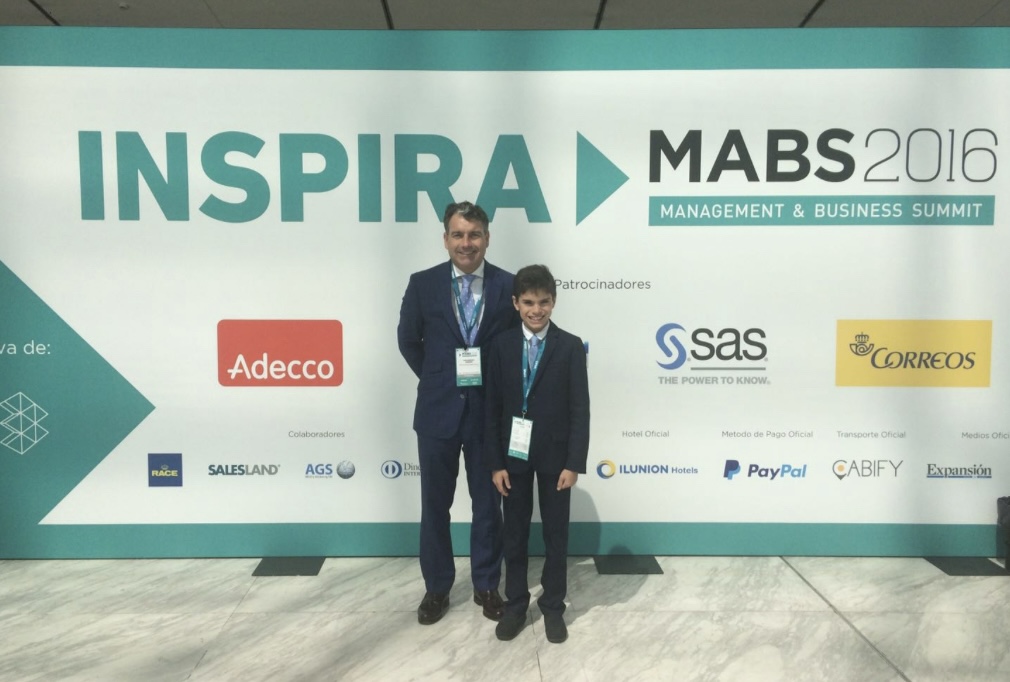
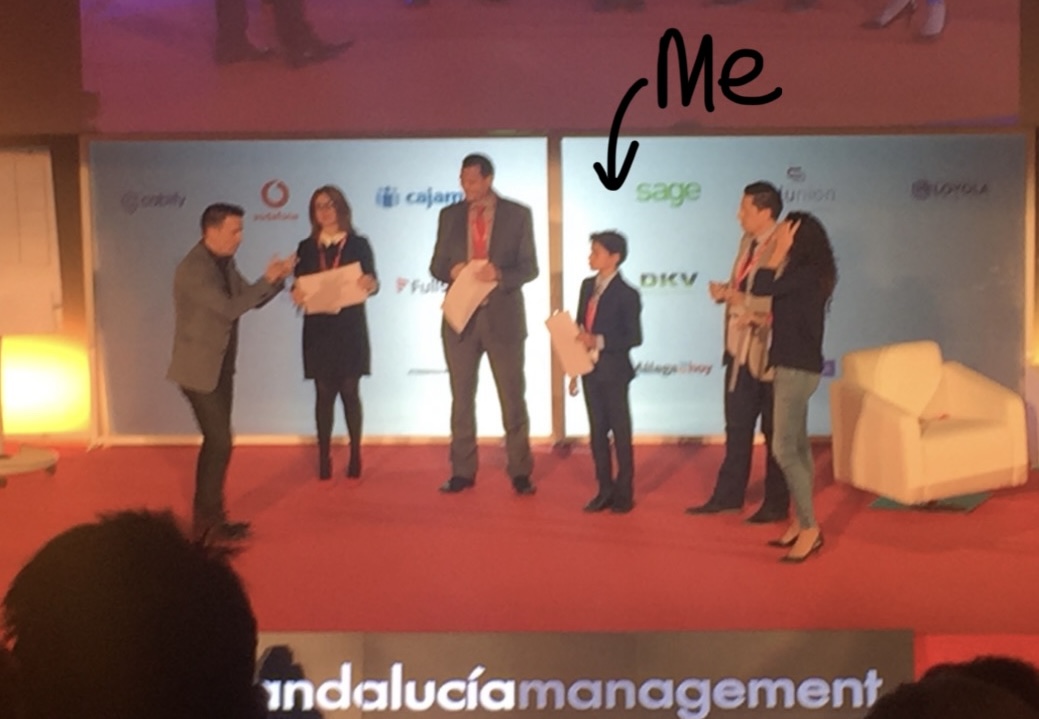
Did I understand half of what they were saying? Not even close.
Did I love every second of it? Absolutely.
So naturally, I figured I’d follow the path laid out in front of me: estate planning, real estate, startups.
Until, well… I didn’t.
The Engineering Detour
Out of nowhere, a plot twist: Physics.
I was fascinated by the idea that a single equation could describe how the entire universe worked. That kind of precision? That kind of elegance? It felt like magic.
Suddenly, Engineering Physics became my new obsession.
A big part of that came from my aunt and uncle, both physicists, who had an infectious enthusiasm for science. My aunt, a high school physics teacher, would always have Veritasium videos playing in the background whenever I visited. And let me tell you – there’s something incredibly addictive about watching someone explain why the universe does what it does, especially when they’re genuinely excited about it.
Then came my aerospace engineering phase.
Physics was fascinating, sure – but rockets? Rockets were on a whole other level. The idea of designing machines that literally defy gravity? That was the ultimate challenge. Plus, let’s be real: casually dropping “I design spacecraft for a living” into conversations? Instant aura.
So that was the new plan. Amazing.
Big Moves
At sixteen, I made one of the biggest decisions of my life – packing up and moving from Spain to The Woodlands, Texas, to live with my mom, sister, and stepdad.
If you’ve never moved to a new country as a teenager, let me paint a picture for you:
One day, you’re in Spain, speaking Spanish, eating dinner at 10 PM, and living life as a civilized human being.
The next, you’re in Texas, scratching your head over phrases like “raining cats and dogs,” eating dinner at 6 PM (seriously, why?), wondering if I was about to be tucked into bed right after, and trying to figure out why everyone is obsessed with high school football.
Culture shock? Slightly. But the biggest surprise wasn’t the oversized everything. It was an elective choice that changed everything.
The High School Spark
See, in Spain, my academic path was pretty much set. But in the U.S.? Electives. Options. A choose-your-own-adventure moment. So naturally, I picked Intro to Computer Science because, well, it sounded better than “Agricultural Science.”
And like that, with no fanfare, no dramatic music, and certainly no life plan – coding entered the chat.
Top Tip: Some of life’s best decisions happen completely by accident.
The first time I wrote a program – just a simple “Hello, World!” – I felt something click. This was different. It was a small taste of what was to come.
Around the same time, I joined the robotics club, initially drawn by my aerospace aspirations. I figured designing robots was the closest I’d get to spacecraft in high school, so I dove into CAD with all the enthusiasm.
I was good at it (I mean, really good). But here’s the problem: it was painfully tedious.
Imagine spending six painstaking hours designing the perfect part – every measurement aligned, every angle precise. You’re a digital Michelangelo. And then, with one innocent click? Boom. Software crash. Hours gone. Your soul leaves your body.
Welcome to CAD.
It felt like a never-ending cycle of boredom. And the manual work? Nah.
So, while CAD taught me precision and patience (sort of), it also taught me that maybe, just maybe, aerospace engineering wasn’t my true calling. And that’s when coding swooped in to save the day.
In the robotics club, I quickly realized that dealing with physical components wasn’t my thing. I preferred the abstract nature of coding. Searching for a broken wire was frustrating, but hunting down a bug in the code? That was amazing.
By senior year, I transitioned to programming and led a team. I found myself more engaged and excited about the possibilities of what we could create with code. Leading the team was a challenge, but it was also incredibly rewarding. I discovered a passion for problem-solving and innovation that I hadn’t felt before.
And somewhere between CS class, robotics, and late-night coding sessions, it became clear: I enjoyed writing code far more than any other type of engineering.
A Love Letter to Code (And a Few Rejections Along the Way)
I could write code and immediately see results. Unlike CAD. Unlike financial modeling. Unlike basically everything else I had tried. It was instant feedback, instant creation. That was the first time I felt what some call “flow” – that deep focus where time disappears, and your mind is fully locked in.
That’s when the path changed for good.
College applications rolled around, and suddenly my “finance bro” persona was out, and “wannabe software engineer” was in. I set my sights on the best computer science programs in the world. MIT? Stanford? Harvard? Rejected, rejected, and rejected again.
Ouch.
It was a gut punch. For a few months I questioned everything. Was I even good at this? Maybe I should just do finance, where I at least understood the rules of the game.
But then I did something that changed my mindset: I took Harvard’s legendary CS50x. No grades. No pressure. Just me, a laptop, and an increasingly concerning amount of late-night coding. That course rekindled everything I loved about programming. I built things. I learned. I pushed through.
And then I got into Cornell.
- Strong CS program? ✔️
- Ivy League? ✔️
- Financial aid? ✔️
It was the perfect choice.
Finding the Art in Code
For the longest time, I thought programming was just about rules, logic, and efficiency. But along the way, I realized that coding isn’t just logic – it’s art. Algorithms are poetry. A well-structured function is as satisfying as a perfectly composed melody. The best software? It’s not just functional. It’s elegant. Beautiful, even.
I remember writing my first real-world program that mattered – a tool to automate a tedious workflow for the Science NHS chapter at my high school. Fully in the zone, coding until 3 AM, completely losing track of time. That was it. That was flow.
It wasn’t glamorous. It wasn’t rocket science. But it saved people hours of work, and that? That was magic.
I started seeing patterns. Not just in syntax or logic, but in the way problems connected to solutions. Finance? It was just another system. Engineering? Just another way to solve problems. Everything was code – some written in Python, some in spreadsheets, some in the way people make decisions.
I had finally found my thing.
What I Learned From All Those Pivots
Looking back, my journey makes zero sense on paper. Finance, physics, aerospace, CS – it’s all over the place.
But here’s what I’ve realized: Every detour taught me something valuable. Finance taught me how to think in systems. Engineering taught me how to break down complexity. Moving to a new country taught me how to adapt.
The truth? Most careers don’t follow a straight line. They zig. They zag. And sometimes, they loop back in ways you never expected. If you had told my eleven-year-old self – the one sketching real estate portfolios – that he’d end up writing code, he’d laugh in your face.
And yet, here we are.
So if you’re pivoting for the tenth time, wondering if you’ve wasted years chasing the wrong dream – congrats. You’re right on track. The best stories are never linear.
And at the end of the day, isn’t that what makes them worth telling?